
July 6, 2026 · TRQM India Limited, India
HSE Inspection Faults I Noted at TRQM India Limited
My attempt to organize a few basic health, safety, and environment observations into clearer inspection notes.
Introduction
These are my notes from a small HSE inspection exercise at TRQM India Limited. I wanted to look at some common workplace safety faults and understand why they matter, not just list them as “non-compliances.”
The main things I noticed were related to:
- Electrical safety
- Fire extinguisher condition and readiness
- Site barricading and warning signs
- General housekeeping around safety equipment
This is not a complete audit report. It is more like my learning record: what I saw, what it could mean, and what I would check next.
1. Electrical Socket Damage and Burn Marks
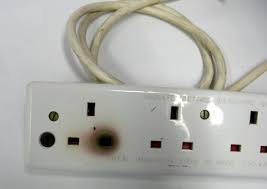
One of the most visible safety concerns was a socket or extension board with a burn mark. Even a small burn mark around a socket should not be ignored because it may indicate overheating, loose contact, overloading, or poor-quality electrical connection.
Why this is a concern
A damaged or overheated socket can lead to:
- Electric shock risk
- Short circuit
- Fire hazard
- Equipment damage
- Further heating if the socket continues to be used
My learning note
Electrical faults often look minor in the beginning. A small black mark, loose plug point, or warm socket can become a serious hazard if it is normalized.
Suggested corrective actions
- Stop using the affected socket immediately.
- Inform the electrical maintenance team.
- Replace the damaged socket or extension board.
- Check whether the connected load was too high.
- Avoid using multi-plug extensions for heavy-load equipment.
- Add periodic electrical inspections to the routine checklist.
2. Damaged or Exposed Wires
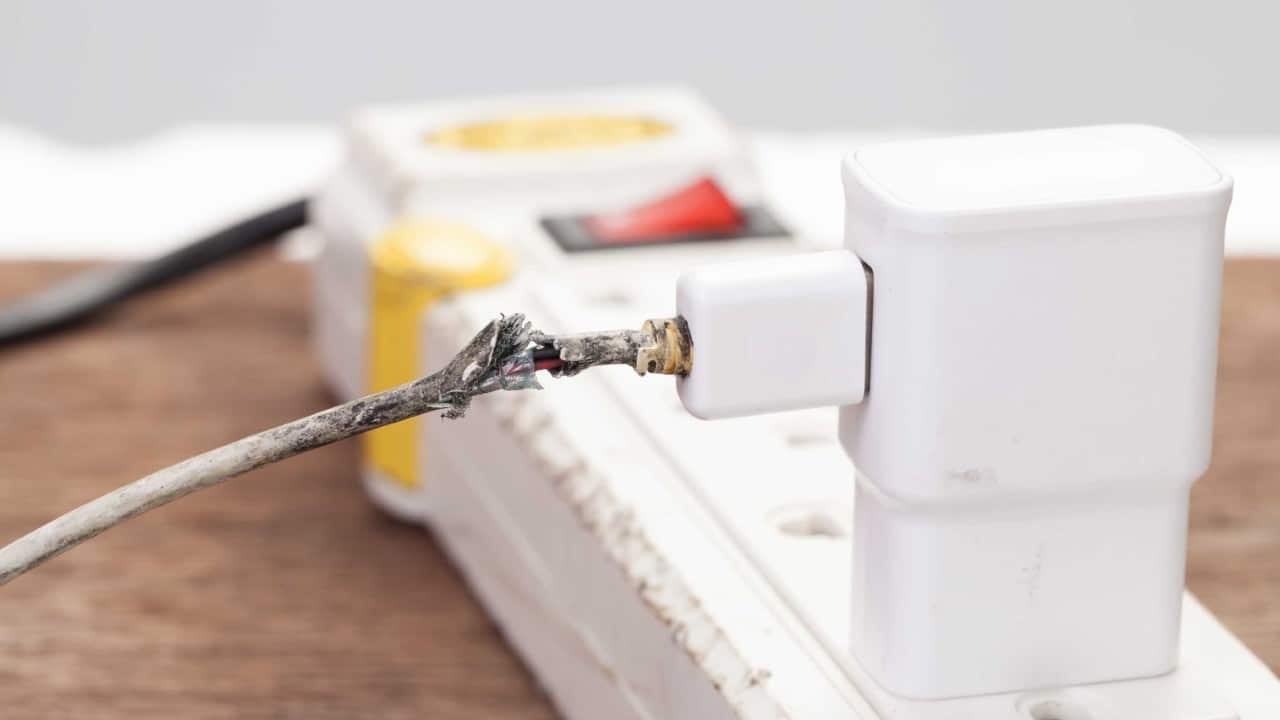
Another important observation was damaged wiring. Exposed or worn-out cable insulation is a direct electrical safety issue.
Why this is a concern
Damaged wires can cause:
- Direct contact with live conductors
- Electric shock
- Spark generation
- Short circuit
- Fire risk, especially near flammable material
My learning note
A damaged cable is not just an equipment problem. It becomes a human safety problem the moment someone handles it, moves it, or works near it.
Suggested corrective actions
- Remove damaged cables from service.
- Replace the cable instead of doing temporary tape repairs.
- Use proper cable routing to avoid crushing, pulling, or abrasion.
- Keep cables away from sharp edges, water, and heat sources.
- Include cables and plugs in regular inspection rounds.
3. Poor Fire Extinguisher Condition
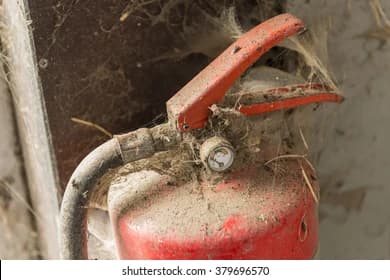
Fire extinguishers are only useful if they are accessible, inspected, charged, and in good condition. A dusty, rusty, or poorly maintained extinguisher creates doubt during an emergency, which is exactly when there is no time for doubt.
What I would check
For any fire extinguisher, I would check:
- Is it easily accessible?
- Is it clearly visible?
- Is the pressure gauge in the correct range?
- Is the safety pin and seal intact?
- Is the hose/nozzle in good condition?
- Is the inspection tag updated?
- Is there rust, leakage, or physical damage?
4. Rust and Damage on Fire Extinguisher Parts
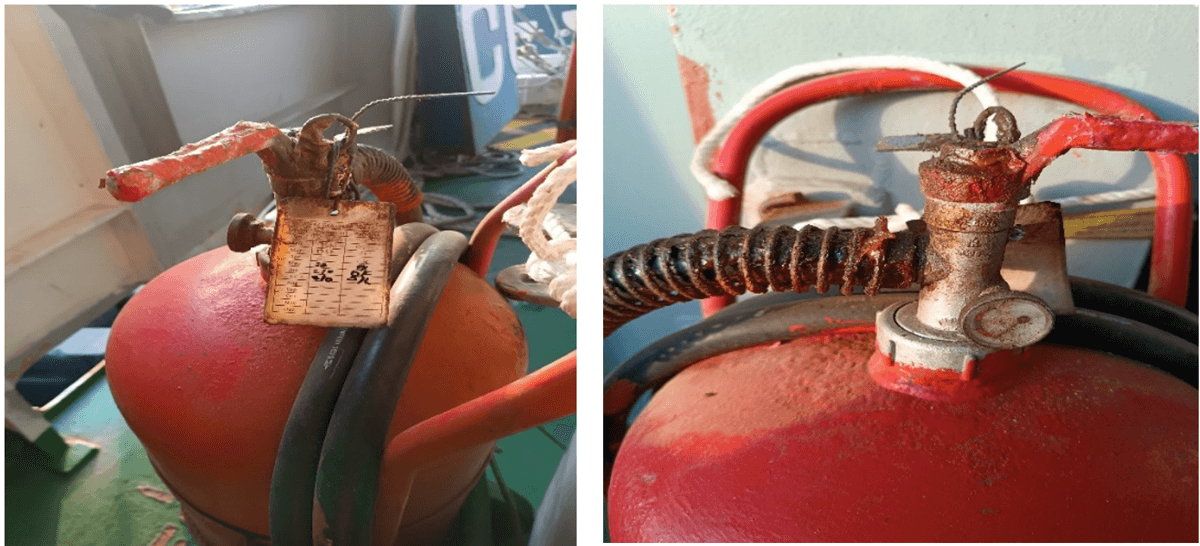
This image helped me focus more specifically on the top assembly of a fire extinguisher. Rust around the valve, hose connection, handle, or pin area is a warning sign.
Why this is a concern
Rust or corrosion can affect:
- Operation of the handle
- Hose connection strength
- Pressure holding capacity
- Reliability during emergency use
Suggested corrective actions
- Inspect the extinguisher immediately.
- If corrosion is significant, remove it from service.
- Replace damaged or rusted parts only through a competent person/vendor.
- Maintain extinguishers in clean, dry, visible locations.
- Ensure inspection tags are updated after every check.
5. Damaged Barricading and Warning Sign Management
Barricading is meant to protect people from entering unsafe areas. If barricades are broken, fallen, or poorly arranged, they may fail to communicate the hazard clearly.
Why this is a concern
Poor barricading can lead to:
- Unauthorized entry into hazardous areas
- Trips and falls
- Workers or visitors missing the warning sign
- Confusion during movement around the site
Suggested corrective actions
- Reinstall damaged barricades properly.
- Keep warning signs upright and visible.
- Use strong barricading where there is excavation or construction activity.
- Remove broken barricade materials from walkways.
- Inspect barricaded areas regularly, especially after wind, rain, or vehicle movement.
What I Learned From These Observations
The faults I noted are basic, but that is exactly why they matter. Many HSE issues are not complicated at first. They are visible things that people may pass by every day:
- A burnt socket
- A damaged wire
- A dusty extinguisher
- A rusted fire extinguisher part
- A fallen barricade
My main takeaway is that HSE inspection is partly about noticing small signs early. If small faults are corrected quickly, they do not get the chance to become incidents.
Simple Checklist I Would Use Next Time
For my next inspection, I would like to use a simple checklist like this:
Electrical Safety
- Are sockets and plugs free from burn marks?
- Are cables properly insulated?
- Are extension boards overloaded?
- Are wires routed safely?
- Are damaged electrical items removed from use?
Fire Safety
- Are extinguishers accessible and visible?
- Are inspection tags updated?
- Are gauges in the safe range?
- Are hoses, pins, and handles in good condition?
- Is there any rust, dust, or physical damage?
Site Safety and Barricading
- Are work areas properly barricaded?
- Are warning signs visible?
- Are walkways clear?
- Are broken barricade materials removed?
- Is the hazard clearly communicated?
Closing Thought
This exercise reminded me that HSE is not only about rules and forms. It is also about paying attention. A good inspection habit is to slow down, observe carefully, ask why something is unsafe, and then suggest a practical correction.
These notes are my attempt to make those observations clearer and more useful for future learning.